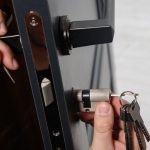
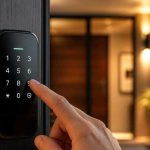
Access control logs help resolve building disputes by replacing memory and accusation with a time-stamped record. The log shows which credential opened which door, and exactly when. If a tenant says the landlord entered without notice, the log can confirm or rule it out. If an owners corporation questions a contractor’s invoice, the log shows when the contractor was actually on site.
Every time a fob, card, PIN or intercom release opens a door, gate or lift, the access control system records the event. Most property owners never look at these records until something goes wrong. By then, the entries that matter may already be overwritten.
A log is strong evidence, but it isn’t perfect. It proves which credential was used, not who was holding it. This guide covers the disputes access control logs can settle in Melbourne strata, rental and commercial buildings. It also explains how logs are used at the Victorian Civil and Administrative Tribunal (VCAT), and why they work best alongside CCTV.
At Gorilla Security, we install access control, CCTV and intercom systems across Melbourne. We design them so the records hold up when you need them most.
Key Takeaways
- An access control log is a time-stamped record of every door, gate or lift event, including granted entries, denied attempts and doors forced open.
- Access control logs can help settle common building disputes, such as disputed landlord entry, contractor billing, common property misuse and unreturned fobs.
- A log proves which credential was used, not who used it, so pairing it with CCTV footage makes the record much stronger.
- Most systems overwrite old logs after a set period, so export the relevant records as soon as a dispute begins.
- Building access records can contain personal information, so who can view them depends on the person’s role and on privacy obligations.
What Is an Access Control Log?
An access control log is the digital record an access control system creates each time someone uses a credential at a controlled door, gate or lift. A credential is whatever the system accepts as ID, such as a fob, swipe card, PIN code or mobile key. Each entry is stamped with the date, time, location and credential ID. Together, these entries form an audit trail of building access records.
Information an Access Control Log Records
Most systems record far more than successful entries. The table below shows common event types and what each one can show in a dispute.
| Event type | What it records | What it can show in a dispute |
|---|---|---|
| Access granted | A valid credential opened a door | A specific credential was used at a specific time |
| Access denied | An invalid or expired credential was presented | Entry by force or a mechanical override |
| Door forced | The door opened without a valid credential | Entry by force or a mechanical override |
| Door held open | The door stayed open past its set time | A propped door or tailgating risk |
| Credential changes | A credential was added, edited or removed | When access was given or cancelled, and by whom |
Credential changes are often overlooked. They show when a former tenant’s fob was cancelled, or whether it was cancelled at all. If your system doesn’t record credential changes, ask an access control installer in Melbourne whether it can be enabled.

Building Disputes Access Control Logs Can Resolve
Access control logs can help resolve any dispute that hinges on who entered, where, and when. The most common examples are summarised below.
| Dispute | What the log shows | Who it usually helps |
|---|---|---|
| Landlord entry | Whether the landlord’s credential was used, and when | Tenants and landlords |
| Contractor billing | Arrival and departure times on site | Owners corporations and property managers |
| Common property misuse | Which credentials used the car park, bin room or gym | Owners corporations and lot owners |
| Lost or unreturned fobs | Whether a missing or cancelled credential was used | Building managers and owners |
Landlord Entry Disputes in Rental Properties
In Victoria, a landlord (called a “rental provider” under the Residential Tenancies Act 1997) generally needs to give at least 24 hours’ written notice before entering. Entry is usually limited to between 8am and 6pm unless the tenant agrees otherwise. If a tenant says the landlord entered without notice, the log can show whether the landlord’s credential was used and when. That record can support the tenant’s claim or clear the landlord. Consumer Affairs Victoria publishes the current entry rules.
Contractor Attendance and Billing Disputes
Contractor disputes often come down to hours billed versus hours worked. If a cleaner, gardener or maintenance contractor uses their own credential, the log shows when they arrived and left. An owners corporation can compare those times against the invoice. This only works when each contractor has an individual credential rather than a shared code.
Common Property Misuse in Strata Buildings
Common property is the shared space in a strata building, owned by all lot owners through the owners corporation. Disputes often involve unauthorised parking, dumping in bin rooms or after-hours use of shared facilities. Logs from the car park gate or shared doors show which credentials were used at the relevant times. Because fobs are usually issued per lot, this can narrow a dispute in a small two-to-six townhouse scheme down to one lot quickly.
Lost, Shared or Unreturned Fobs
Fobs that aren’t returned when a tenant moves out or a staff member leaves are a common source of disputes. The log shows whether a missing credential has been used since it went missing. It also shows how quickly it was cancelled. If someone presents a cancelled fob, the log records a denied attempt, which is evidence in itself.
Can Access Control Logs Be Used as Evidence at VCAT?
Yes, access control logs can be submitted as evidence at VCAT in tenancy and owners corporation disputes. VCAT is not bound by the formal rules of evidence that apply in courts. This means it can consider any record it finds relevant and reliable. How much weight a log carries depends on how well you can show it is accurate and complete.
A log is more persuasive when:
- it is exported directly from the system, not retyped or summarised
- the system clock was accurate at the time of the events
- it covers the full relevant period, not selected entries
- it is supported by other records, such as CCTV footage, emails or entry notices

Why Access Logs Work Best Alongside CCTV
An access control log proves which credential was used, not who was holding it. A fob can be lent, borrowed or stolen. This is the biggest limitation of logs as evidence, and it is rarely mentioned. CCTV footage closes the gap by showing the person at the door at the same moment.
| Capability | Access control log | CCTV footage |
|---|---|---|
| Records the time of entry | Yes, to the second | Yes, if timestamps are synced |
| Identifies the credential | Yes | No |
| Identifies the person | No | Often, depending on angle and lighting |
| Easy to search | Yes, by credential, door or time | Slower unless linked to access events |
When the two systems are linked, each access event can be matched to a video clip. That pairing turns “a fob was used” into “this person used this fob.” Video intercoms do the same job at gates and front entries. This is the strongest case for treating access control, CCTV and intercoms as one layered system. If you’re planning security systems installation in Melbourne, ask for access control and CCTV timestamps to be synced from day one.
Who Can View Building Access Records?
Building access records should only be viewed by people with a legitimate reason to see them. In a strata building, that usually means the owners corporation, its manager or the building manager. In a rental property, the landlord or agent may hold the records. Using those records to track a tenant’s everyday movements can create a new dispute rather than settle one.
Access logs can contain personal information because they link a named person to times and places. The Privacy Act 1988 (Cth) applies to organisations with annual turnover above $3 million, plus some smaller businesses. Many small owners corporations and individual landlords fall below that threshold. Treating logs as confidential is still good practice. Lot owners who want to see records should make a written request to the owners corporation.

How to Preserve Access Logs When a Dispute Starts
The most important step is to export the relevant logs before the system overwrites them. Do this as soon as a dispute is raised, not when it reaches VCAT.
- Export the full date range around the incident, not just the key entries.
- Check the system time against a reliable clock and note any difference.
- Save the export in its original format, such as CSV or PDF.
- Record who exported the data, when, and from which system.
- Export matching CCTV footage for the same period.
- Store copies securely and limit who can open them.
How Long Access Control Logs Are Kept
No general rule sets how long building access logs must be kept in Victoria. Retention depends on each system’s settings and storage capacity. Some systems keep years of events, while others overwrite records after a few months. Check your system’s retention setting now, before you need it. If you’re comparing new security systems in Brighton or elsewhere in Bayside, ask how long each one keeps its logs.
Clear Records Settle Building Disputes Faster
Access control logs turn building disputes from competing stories into a clear, time-stamped record. They can show whether a landlord entered, when a contractor arrived, who used the common property, and whether a missing fob was used. Their value depends on three things: individual credentials, accurate system clocks and logs that are exported before they’re overwritten. A log proves which credential was used, so pairing it with CCTV is what shows who was holding it.
At Gorilla Security, we design access control, CCTV and intercom systems that work together as one layered system. We set up individual credentials, sync timestamps across systems and configure retention so your records are there when a dispute arises. We work with strata buildings, rental properties and commercial sites across Melbourne, from small townhouse schemes to multi-tenant buildings.
Ready to make your building’s access records dispute-ready?
Recent Blogs